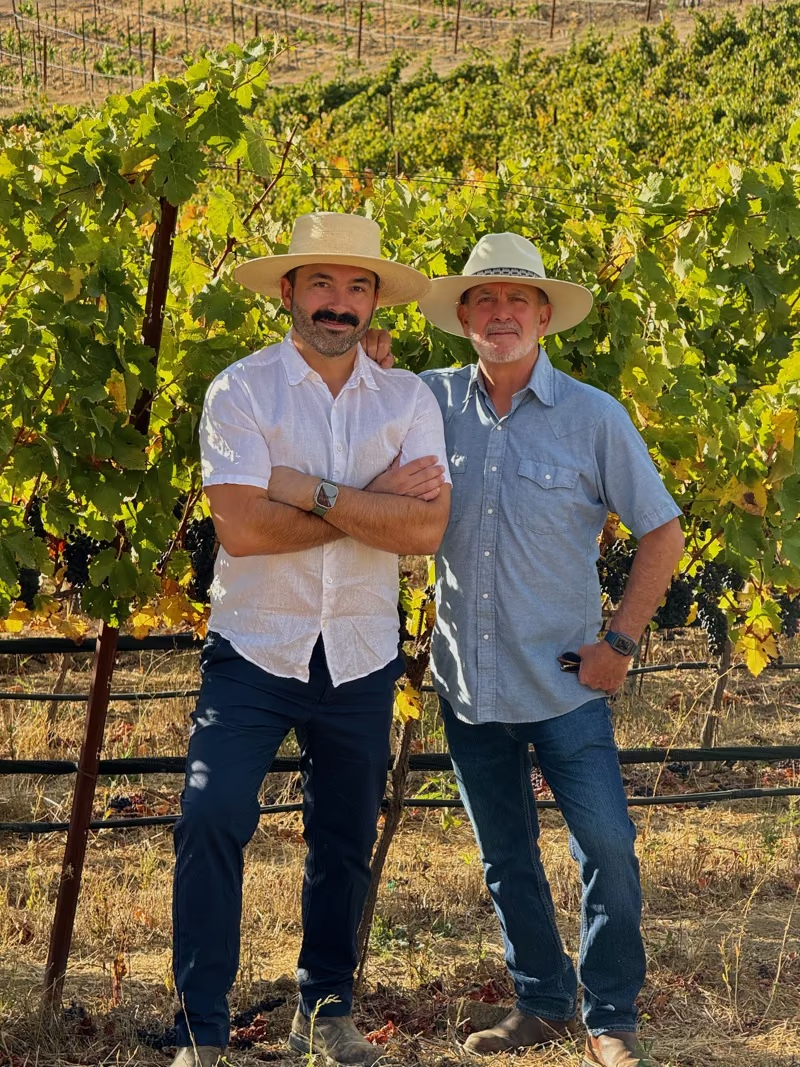
Organically farmed by a local father and son
The Family
The Lopez family (or “Lopai” for those about town) has been part of San Luis Obispo County since at least 1862, when Paul’s ancestor settled on the Cuesta Grade. Paul grew up in Morro Bay, spent nearly four decades working the produce floor of the local grocery store, and knew every face in Paso Robles wine country before he ever made a bottle. He collected friendships and knowledge over time.
His son Brian took a different route: software engineering in the Bay Area, eventually making his way back home to SLO County in 2018. He thinks in systems. He asks what data reveals. He carries a genuine curiosity about what technology can do in the service of land stewardship: less water, lower emissions, better decisions at every stage of farming.
The Name
“The Lopai” is what people in Paso Robles called the Lopez family when they showed up somewhere. A term of endearment. A recognition that the whole crew is here. The family’s local title became an honest showing of pride for a family name. So it became the name of the winery.
How It Started
In 2012, Paul and Brian Lopez visited France and Spain together. On a stretch of road in the Rhône Valley, they stopped at Château de Nages to tour and taste with owner and vigneron, Michel Gassier, a friend from his visits to Paso Robles. He walked them into the vineyard, crouched down, and dug his hands into the earth. He pulled up vine roots and explained everything - what the soil was doing, what the weather was doing, what the winemaker’s job actually was.
They flew home with a different idea of what a winery could be.
The Winemaking
Our farming is organic and sustainable across the estate’s 32 planted acres, rooted 10.5 miles from the Pacific, close enough that the afternoon marine layer arrives reliably every day. We’re farming towards healthier soils, and eventually will have up to 55 acres in production. But we’re doing it slowly, on the land’s terms.